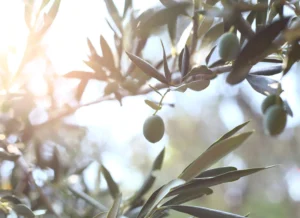
The Secret Behind Kalamon Variety Olives
For centuries, the fertile lands of southern Greece have nurtured a fruit unlike any other: the Kalamon olive. Native to the sun-drenched valleys of Laconia and Messenia, these slender, almond-shaped olives have become the world’s most recognizable table olive, revered for their unmistakable flavor and cultural heritage.
What makes them so special? It begins with the land itself. The limestone-rich soil, Mediterranean climate, and gentle breezes from the Aegean Sea create the perfect terroir. But nature alone does not make Kalamon olives extraordinary—the artistry of Greek growers, who carefully hand-pick each olive only when fully ripe, ensures their legendary quality.
When cured, Kalamon olives reveal their signature taste spectrum: firm yet delicate flesh, with a rich, wine-like depth, subtle fruitiness, and a lingering peppery finish. They carry layers of flavor that unfold on the palate, making them instantly recognizable and impossible to mistake for any other olive. Each bite is a journey—bold yet balanced, smooth yet complex.
Beyond taste, Kalamon olives are a gift of health. Naturally rich in monounsaturated fats, antioxidants, and polyphenols, they embody the essence of the Mediterranean diet. They are not just food, but nourishment for both body and soul, passed down through generations as part of Greece’s cultural identity.
Today, Kalamon olives are enjoyed on rustic village tables and in the finest restaurants around the globe. Their popularity is no coincidence—it is the result of centuries of tradition, the perfection of cultivation techniques, and a flavor that defies imitation. To savor a Kalamon olive is to taste history, heritage, and the living spirit of Greece itself.
Healthy Fats
- Rich in monounsaturated fatty acids (MUFA), especially oleic acid.
- These fats are linked to improved heart health, reduced inflammation, and better cholesterol balance.
Antioxidants
- Polyphenols & flavonoids – These compounds fight oxidative stress and protect cells.
- Hydroxytyrosol & oleuropein – Potent antioxidants unique to olives, with anti-inflammatory and antimicrobial properties.
- These compounds are thought to contribute to olives’ role in longevity and disease prevention.
Vitamins
- Vitamin E – A strong antioxidant that supports skin health and immune function.
- Small amounts of vitamin A and vitamin K.
Minerals
- Iron – Supports red blood cell production.
- Copper – Important for energy production and connective tissue.
- Calcium & Magnesium – Present in smaller amounts, beneficial for bones and muscles.
- Sodium – Higher because of the brining process (something to note for dietary balance).
Fiber
- About 3 g of dietary fiber per 100 g, which helps digestion and satiety.
✅ Summary: Kalamon olives are low in protein, moderate in fiber, high in healthy fats, and rich in antioxidants. Their unique combination of polyphenols and oleic acid is what sets them apart nutritionally and links them to the well-known benefits of the Mediterranean diet.